

In college, I took a Sign Language course to fulfill my foreign language requirement. I came into the class knowing a few basic signs, so I thought it would be an easier option than learning a language that was more foreign to me.
I was looking for easier.
Do you ever do that? Look for the shortcut, the bypass, the path of least resistance to avoid something difficult?
I was wrong about sign language being the easier path for me.
I could not get by on my little one-word signs, and I was not grasping the fundamental concepts of communicating complete sentences or stories with my hands. Apparently, knowing a few signs was not the same as actually knowing sign language. Who knew?
When the professor offered some extra credit, I jumped at the chance to raise my sub-par grade.
The extra credit involved attending our local amusement park, which was hosting a local school for the deaf. I was to attend various entertainment shows throughout the park and write an essay about my observations of the interpreters and the interactions of the Deaf community during the event.
Then came the really fun part.
I would have to sign my essay to my class to receive the full extra credit.

I sat in the audience of a Western-themed show, waiting for it to begin. Little did I know that the lady sitting next to me was the interpreter for the show!
She glanced at me and became interested in knowing why I was there. She asked if I was a reporter since I was holding a notepad and pen.
When I told her I was there for extra credit for my college sign language course, she excitedly asked for my assistance.
“Could you sit in the front row right in front of me and sign the songs being played during the show? You will help keep me on pace with what is happening behind me on stage! It is hard for me to hear since the speakers are facing away from me toward the audience. I would greatly appreciate it!”
I began to nervously shake.
Apparently, my nervous shaking looked to her like an enthusiastic nod of acceptance. Before I could clarify that I had absolutely no idea what she was asking me to do, the interpreter jumped up and ran onto the stage to begin her job of interpreting the show for the hearing-impaired people in the audience.
And there I sat.
I could not muster the courage to say, “I don’t know.”
The truth was, I didn’t know enough sign language to be of any help to her.
She looked at me from the stage and smiled.
The music began.
I smiled back with a hesitant, fake smile.
“Fake it until you make it,” is what I heard a voice in my head say.
But my faking did not last long.
I quickly sprang up from my seat and ran out of the show as fast as I could.

Yep.
That was my extra-credit opportunity.
And I ran.
Somewhere along the way, I picked up the trick of “fake it until you make it.” I believed this to be a very wise approach, and one that would get me very far in life.
Maybe, in some situations, it will.
But for the most part, I have not found this approach to be particularly helpful—or wise.
I became very good at acting like I was the “Information Center,” where people could come to me for answers to their questions.
Ask me anything.
I might not actually know the answer but give me thirty seconds and I could probably construct one that sounded convincing.
The problem with being the Information Center is that eventually someone asks a question you cannot answer.
And eventually, someone figures out that you don't know.
The deeper problem was that I believed not knowing meant something about me.
If I didn't know, maybe I wasn't smart enough.
If I didn't know, maybe I wasn't capable enough.
If I didn't know, maybe people wouldn't respect me.
If I didn't know, maybe I wasn't the leader, parent, employee, friend, or Christian they thought I was.
So I faked it.
I rambled.
I gave answers when I should have admitted I didn't have one.
And I was exhausted from holding up the mask that portrayed everything as okay—that I was okay—and that I knew.
Maybe you can relate.
Maybe you're leading a ministry, supervising employees, captaining a team, raising children, or simply trying to be the person others can count on.
People come to us for help.
They come to us for answers.
But what happens when we don't have one?
What about the friend who comes to us with a difficult faith question we aren't sure how to answer?
Do we ramble through an explanation, hoping they'll “buy it”?
Or can we simply say, “I don't know. Let me investigate that.”
“I don't know. Let's see what Scripture says.”
“I don't know. Let me pray about that.”
“I don't know, but I know someone who might.”
“I don't know, but God does.”
There is freedom in those words.
For much of my adult life, I continued to act in defense and became embarrassed to be caught not knowing something—especially if I felt like I should know.
When someone called me out on my rambling or my attempt to fake an answer, I would backpedal into an excuse or place blame on someone or something else.
I didn't like owning my not knowing.
“Well, that's what so-and-so told me!”
By making someone else look worse than me, I was trying to make myself look better.
Or so I thought.
“Well, THEY said.”
My kids would be quick to challenge me with:
“Who’s THEY?”
Good question.
I didn't know.
But I didn't want to say I didn't know.
Silly me.
My ego.
My pride.

“I don't know” can be powerful words.
They can be engaging and empowering words when followed by, “But let's find out.”
“I don't know, but I'll find out.”
“I don't know. What are your thoughts?”
“I don't know, but I will find someone who does.”
“I don't know, but God does.”
Not knowing is not a sign of weakness.
It can be an act of humility—an acknowledgment that only God knows all.
We don't.
And we won't.
But we also don't have to remain in the dark simply because we don't know the answer yet.
We can seek the truth instead of pretending we already possess it.
“I don't know” keeps us learning, growing, receiving, and wanting to know more.
Maybe “I don't know” isn't a dead end after all.
Maybe it is an invitation.
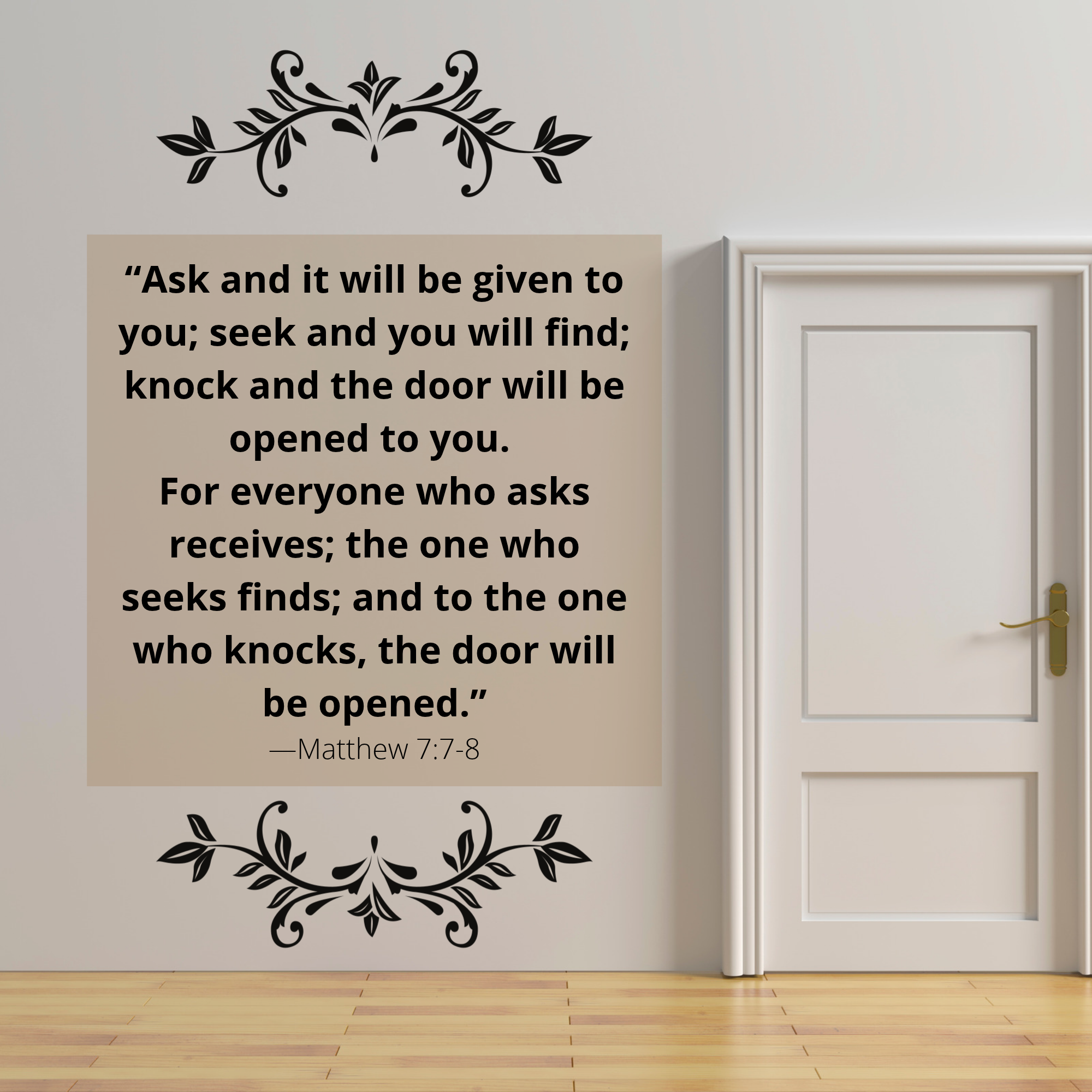
I don't know.
So I'll ask.
I don't know.
So I'll seek.
I don't know.
So I'll knock.
We can go into work, ministry, family life, and relationships with the freedom of not having to know everything—or needing to know everything.
Whew!
What a relief.
I don't have to be the Information Center.
I don't have to have every answer, know every solution, or pretend that I have it all together.
I can simply say, “I don't know.”
And then I can take the next faithful step.
Because not knowing doesn't mean I am lost.
It means I have an opportunity to ask, seek, learn, grow, and trust the One who already knows the way.
I ended up faking my sign language extra-credit essay, and my overall grade reflected my flailing attempt.
In fact, that sign language class was the only class that kept me from graduating with the highest academic honor.
And here's the kicker: the very next semester, I tested out of Spanish by one point.
One.
Point.

Which meant I never actually needed that sign language class in the first place.
Apparently, God had a lesson for me that had nothing to do with my foreign-language requirement.
But that's another story for another day!
I am grateful for the valuable lesson I learned in that sign language class—and especially on that extra-credit day.
I thought I was there to learn how to sign.
Instead, I learned how to say something I would need far more often than I realized:
“I don't know.”
Lord, there are so many things I just don't know.
I don't always know what to say to my children, how to comfort a grieving friend, how to love someone who is difficult to love, or how to navigate the circumstances that leave me searching for answers.
I don't know the answer to every financial worry or health concern. I don't always know how to proclaim my faith in word or action. I don't always know what to say to encourage my spouse, my co-worker, my friend, or even myself.
Help me be okay with not knowing—because You do know.
Help me lay down my pride, my need to appear capable, and my exhausting habit of pretending I have all the answers.
Teach me to ask.
Teach me to seek.
Teach me to knock.
And when I don't know what to do next, remind me that I don't have to know everything to take the next faithful step.
Thank You for placing people, resources, wisdom, and opportunities in my path that help me learn, receive, and grow.
And may Your will be done as You use me to inspire others to do the same.
Amen.
With love and blessings,
Bonnie ❤️
✨ Did this post speak to your heart in some way?
I’d love to stay connected with you through The 4:13 Journal delivered straight to your inbox. It’s my free gift to you — a simple and meaningful space to reflect, reset, and remember the strength we have in Christ.
Feel free to share this post with a friend, too. 🤍
✨ Subscribe here: