

I didn't understand the story of the donkey in the well when I first heard it.
Years later, I would.
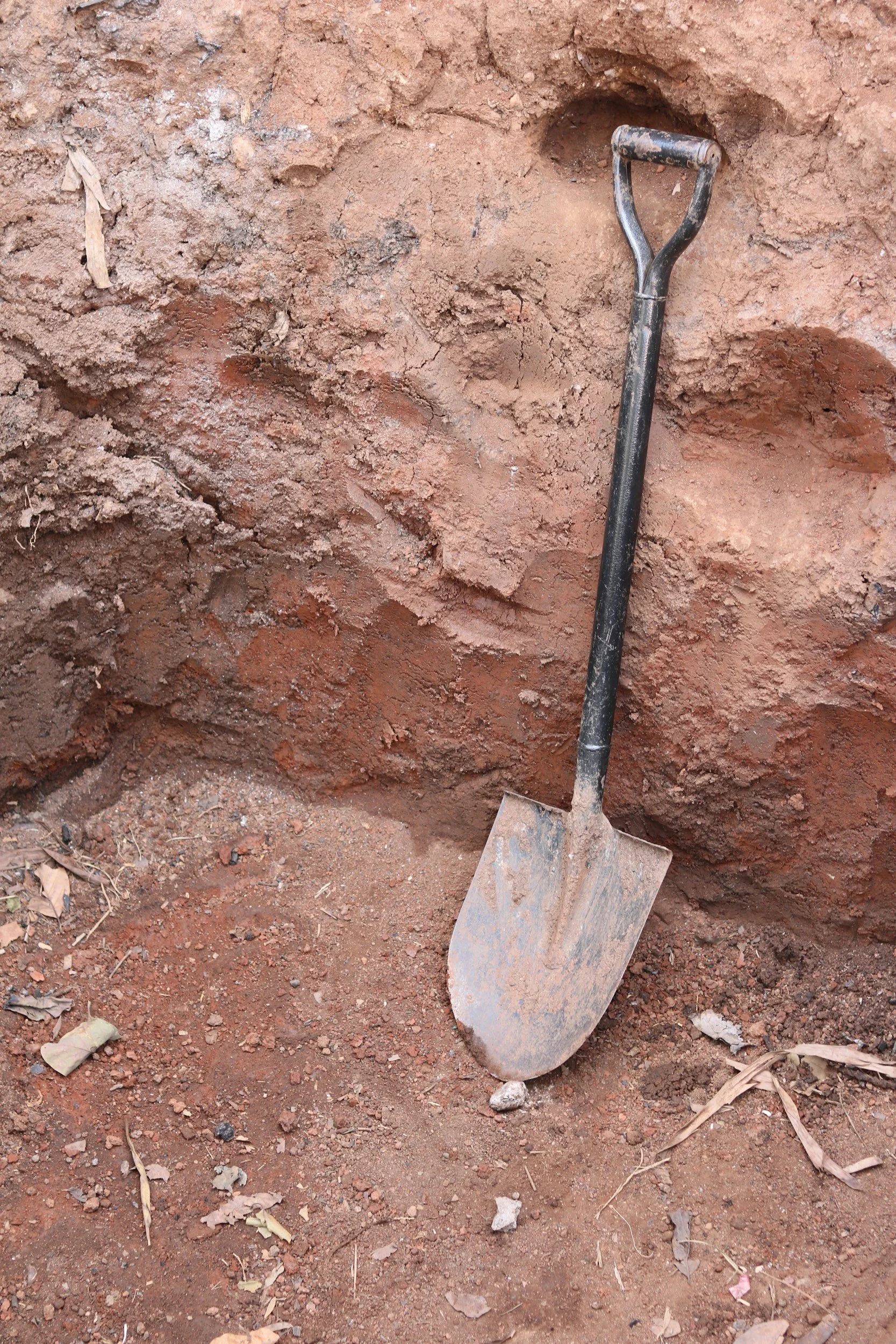
There's an old story about a donkey that falls into a well. The farmer decides the donkey is too out of reach to save and begins filling the well with dirt. At first, the donkey is frightened. But then something changes.
With every shovel of dirt that lands on his back, he shakes it off and steps up onto it.
More dirt. Shake it off. Step up.
More dirt. Shake it off. Step up.
Eventually, the donkey uses all that dirt to climb out of the very well that had trapped him.
The usual lesson is simple: when life throws dirt on you, shake it off and keep moving upward.
I used to think that was a nice little motivational message.
I didn't understand that sometimes the dirt hurts.
Sometimes it's personal.
Sometimes the dirt isn't a difficult circumstance or an unexpected setback.
Sometimes the dirt is someone's words about you.
Someone misunderstands you.
Someone questions your motives.
Someone judges your character.
Someone tells a story about you that isn't true.
Someone wants to keep you knocked down and out of reach.
And suddenly you're standing in a well, looking up, wondering how in the world you got there.
That's what happened to me.
The First Shovel of Dirt
I was working for a small company where employee morale was at an all-time low. There wasn't a human resources department, and I had recently graduated with my bachelor's degree in Psychology of Organizational Development (aka human resource management).
One Monday, a friend who worked for a large company sent me a motivational story that her CFO had shared with their employees for "Motivational Monday."
It was the story of the donkey in the well.
I thought it was encouraging, so I decided to pass it along to my fellow employees and my boss. My intention was simple: maybe it would give everyone a little encouragement on a difficult Monday.
Most people responded positively and appreciatively.
But not everyone.
Two employees told me they never wanted to receive emails like that from me again. They said they only wanted emails about God. They accused me of being "New Age."
I remember thinking, Whoa, whoa, whoa.
This was a motivational story. It wasn't a religious message. I certainly wasn't trying to introduce some New Age philosophy into the workplace. Plus, I sincerely didn't even know what ‘New Age’ meant!
I apologized for unknowingly and unintentionally offending them.
They didn't accept my apology.
They didn't believe my intentions were innocent.
And then things became much worse.
I was accused of stealing from the company by these two colleagues. They led the owner to believe I was going to sue the company.
Huh?
The dirt was coming fast and hard.
I was stunned.
How do you defend yourself against something you didn't do?
How do you prove the motives of your own heart?
What do you say when someone has already decided who you are?
I left that day.
I was angry. I was hurt. I was bewildered.
And I resigned effective immediately.
Later, the owner learned the truth from the other employees. He asked me to stay.
But there had been no accountability for what had happened, and I decided that I couldn't go back.
At the time, I didn't think of myself as the donkey in that story.
I felt like the donkey buried underneath the dirt, unable to shake it off, unable to step up and out.
And I didn't understand yet that this would become a lesson I would revisit many times.
The Dirt Hurts
I think I've sometimes misunderstood what it means to "shake it off."
It doesn't mean the dirt didn't hurt.
It doesn't mean I wasn't angry.
It doesn't mean I wasn't devastated.
It doesn't mean I shouldn't have needed help.
Sometimes the dirt hurts so badly that you have to stop climbing for a while.
You have to cry.
You have to grieve.
You have to admit that you're angry.
You may need a counselor.
You may need your husband to hold your hand.
You may need your children to remind you of who you are.
You may need people who love you to sit beside you while you try to make sense of something that doesn't make sense.
And you may need God.
Not the God standing over us saying, "Come on. Get over it. Shake it off."
But the God who is willing to sit with us in the bottom of the well.
The God who hears us when we're angry.
The God who knows when we're hurt.
The God who knows our intentions even when other people don't.
The God who can handle our questions, our tears, our disappointment, and even our anger.
Maybe "shaking it off" isn't about pretending the dirt didn't happen.
Maybe it is about refusing to let the dirt become part of our identity.
I can acknowledge that it hurt without allowing it to define me.
I can grieve what happened without living there forever.
I can forgive without pretending I wasn't wounded.
I can learn without believing every accusation.
I can return without pretending everything is exactly as it was.
And I can keep climbing.
I wish I could say I learned all of this from that first experience.
I didn't.
The Letter
Four years later, I found myself in another situation where I was deeply misunderstood.
This time, it was at my church, where my family and I had been members since I was four years old.
I had been selected as the director of a women's retreat, and a year later, I was selected as a spiritual companion for a teen retreat. I loved serving in those ways. I wanted to encourage people in their faith and help create a safe place for them to grow.
There had been some tensions surrounding the women's retreat that carried over into the teen retreat. But the teen retreat itself ended up being amazing and full of God's wonders. The entire group was on a retreat high!
Our oldest son and daughter served as team members on the retreat. A week before the retreat, the adult leaders of the retreat asked my husband if he would join our team to help serve primarily for a teen retreatant who had special physical and medical needs. My husband was essential that weekend in helping to carry the teenager up and down the stairs of the retreat center.
It truly had been a beautiful weekend.
My family and I returned home to my parents, who had been taking care of our home while we were away that weekend.
My parents had brought in our mail and placed it on the kitchen counter.
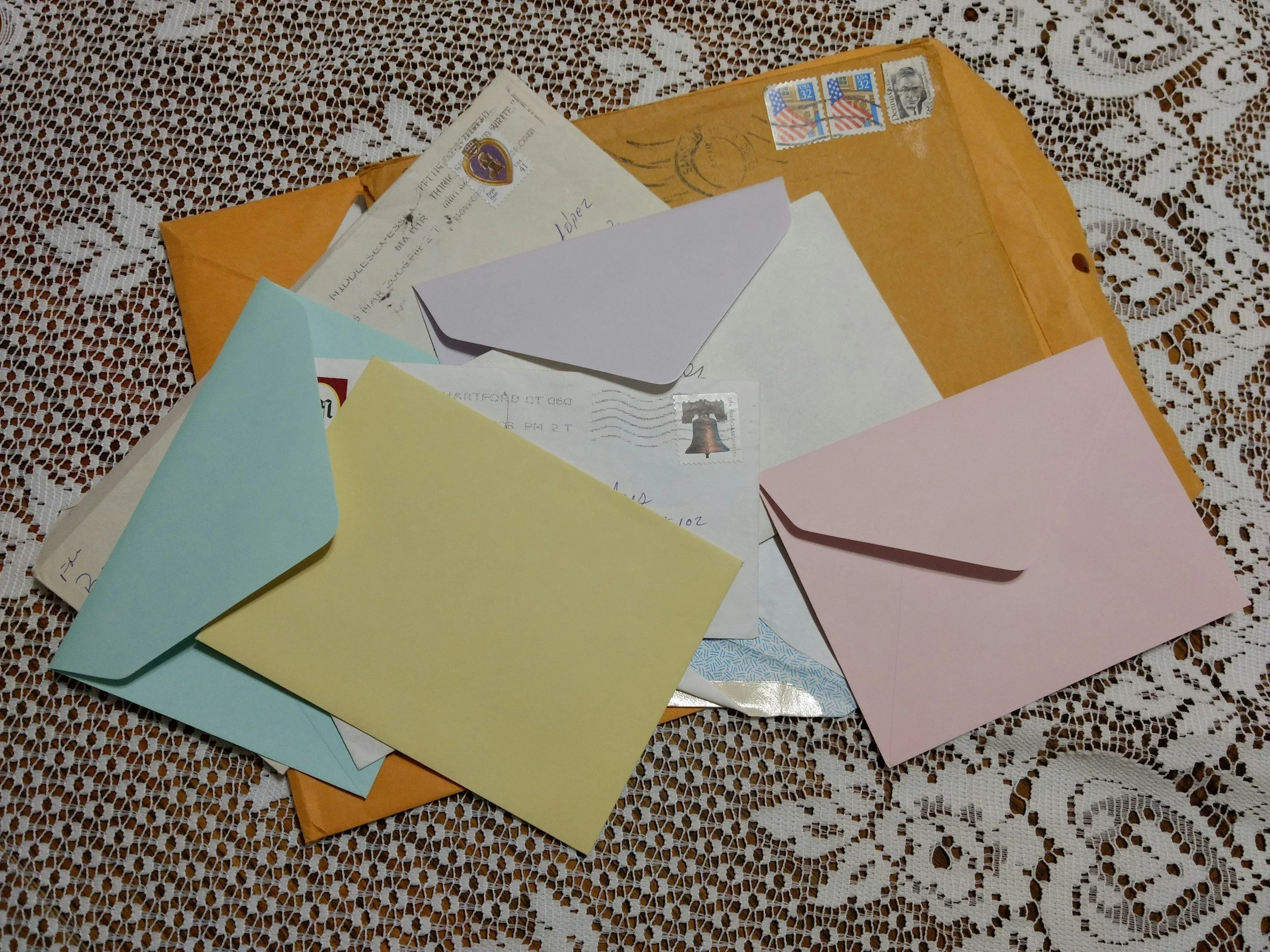
There, among the ordinary mail, was an envelope with no return address.
I remember noticing the handwriting on the outside.
It looked almost like a child had written our address.
There was nothing else handwritten inside. The letter itself was typed.
I opened it.
I didn't make it past the first few sentences.
I dropped the letter and ran to our bedroom.
I was overwhelmed with sorrow.
I sobbed.
From our bedroom, I could hear my family quietly reading the entire letter.
Then my husband came running to me.
The letter contained accusations and words about me that were devastating. I was called vindictive, malicious, and other things that were almost impossible for me to comprehend.
And then there was the signature:
"The entire church community."
I remember asking my husband to get something we had received at the retreat—something I could hold onto.
I needed something tangible.
Something that reminded me of the blessings of that weekend.
I asked him to hold my other hand.
And together we prayed.
I prayed for the person or persons who had written the letter.
I asked God to bless them.
I asked God to forgive them.
And I asked God to forgive me if I had unintentionally hurt them in some way that had contributed to such hatred.
I was heartbroken, but I didn't want my heartbreak to become hatred.
While we were praying, my mom called our priest.
He arrived at our home a few hours later.
He took the letter with him and arranged for me to meet with the church counselor the following day.
The priest then told me that he was scared by the situation, too.
I remember thinking, Well, that's comforting.
Even now, I can laugh a little about that.
But at the time, there wasn't much that felt funny.
The counselor told me that I had every right to feel angry. It was a natural response.
Angry.
That word stayed with me.
Because the counselor helped me realize something about myself.
I don't deal with anger very well.
My instinct is to turn it into something positive as quickly as possible.
Find the lesson.
Find the silver lining.
Forgive.
Move on.
Be gracious.
Be spiritual.
Shake it off.
Or stuff it away and out of sight.
But sometimes that's not what we need first.
Sometimes we need to acknowledge that something hurt.
Sometimes we need to be angry before we can let the anger go.
Sometimes we need to grieve.
Sometimes we need help.
And sometimes the most spiritual thing we can do is admit:
"This really hurt me."

When the Well Becomes Somewhere You Don't Want to Go
The aftermath of that experience was significant.
I stopped going to church for about six months.
That is difficult for me to admit because church had always been such an important part of my life.
But I couldn't simply pretend that nothing had happened.
I didn't trust the same way.
I didn't feel safe in the same way.
And I wasn't sure how to reconcile my love for God with the hurt I had experienced from people within His church.
Then one day I heard my children expressing negative remarks about church.
And something shifted.
I realized that my pain wasn't only affecting me.
If I stayed away because I was hurt, what were my children learning about their faith?
Was I unintentionally teaching them that when people hurt us, we walk away from God?
That wasn't what I wanted for them or any of my loved ones.
So, I went back to Mass.
I returned.
But I want to be honest about something:
It was never quite the same for me.
Trust had been damaged.
I had a complicated relationship with church after that.
Sometimes I still do.
I can love the church and struggle with the church.
I can love God and be wounded by God's people.
I can want to serve and still be afraid of being misunderstood.
Maybe that's one reason this spiritual writing feels so important to me now.
I'm not writing because I've figured it all out.
I'm writing because I'm still learning.

Don't Take Ownership of Other People's Dust
Jesus tells His disciples to shake the dust from your feet when they are not received or listened to (Matthew 10:14).
I have always found that image powerful.
Shake the dust off.
Don't carry it with you.
Don't let it become part of you.
Don't take ownership of someone else's dust.
Of course, there are times when criticism is deserved.
There are times when God uses another person to reveal something in us that needs to change.
We should be humble enough to listen.
We should apologize when we're wrong.
We should be willing to grow.
But not every accusation is a revelation of our character.
Not every rejection is God's verdict.
Not every person's opinion of us deserves a permanent place in our hearts.
There comes a point when we have to say:
That belongs to you. I don't have to carry it.
My husband has reminded me of this over and over through the years.
Focus on the many people who love you.
Focus on the people who support you.
Focus on the people who know you and see you as you really are.
Don't allow a few people who don't become louder in your mind than all the people who do.
It's good advice.
I wish it were easy.
I like people.
I want everyone to like me.
I want to be understood.
I want my intentions to be seen as good.
I want to get along with everyone.
But I know that's not realistic.
We're not going to be everyone's cup of tea.
And, honestly, not everyone is going to be ours.
That's part of being human.

Do It Anyway
I've always loved the message behind Kent M. Keith's The Paradoxical Commandments. The words are often associated with Saint Teresa of Calcutta because she displayed them at her children's home in Calcutta. The message encourages us to act with integrity and compassion regardless of how others respond.
Do the right thing anyway.
Be kind anyway.
Tell the truth anyway.
Love anyway.
Serve anyway.
Forgive anyway.
Not because everyone will appreciate it.
Not because everyone will understand.
Not because you'll always be treated fairly.
But because who you are isn’t ultimately determined by how someone else responds to you.
That's where my faith becomes so important to me.
If my identity depends on whether everyone approves of me, I am going to spend my life chasing something I can never have.
But if my identity is rooted in Christ, I don't have to win every argument about who I am.
I don't have to convince everyone.
I don't have to make everyone like me.
I don't have to carry every accusation.
I can listen.
I can learn.
I can apologize when I'm wrong.
I can forgive.
I can set boundaries.
I can walk away.
And I can leave the dust behind.

Who Gets to Define You?
I think that may be the real question underneath the story of the donkey.
Who gets to define you?
The people who misunderstood you?
The people who judged you?
The people who believed the worst about you?
The people who walked away?
Or the God who knows you completely?
Isaiah 49:16 says: "See, I have engraved you on the palms of my hands." (NIV)
Not penciled.
Not written in disappearing ink.
Engraved.
Known.
Remembered.
Loved.
That is where I want my identity to rest.
Not in the dirt someone threw.
Not in the accusations.
Not in the rejection.
Not even in the praise.
But in Christ.
So, when the dirt comes—and sometimes it will—I am learning to do something different.
I don't have to fight every battle.
I don't have to chase every misunderstanding.
I don't have to make everyone understand me.
I don't have to carry what was never mine.
I can acknowledge that it hurt.
I can grieve.
I can get angry.
I can ask for help.
I can pray.
I can forgive.
And eventually, I can shake off the dust.
I can take the next step.
And then another.
And another.
Until one day I realize that the very dirt I thought was going to bury me has become part of the path that led me out.
I was never meant to live in that well.
Neither are you.
So, what are you carrying that was never yours to carry?
Whose words have you allowed to define you?
And what would it look like to shake off the dust, take a step up, and walk free?
Maybe the dirt hurts.
Maybe it always will.
But the dirt doesn't get to have the final word.
God does.
With love and blessings,
Bonnie ❤️
✨ Did this post speak to your heart in some way?
I’d love to stay connected with you through The 4:13 Journal delivered straight to your inbox. It’s my free gift to you — a simple and meaningful space to reflect, reset, and remember the strength we have in Christ.
Feel free to share this post with a friend, too. 🤍
✨ Subscribe here: